Anne Harvey, Phoebe Violet: violins
tba: cello, bass, reeds
Martin Eberle: trumpet
Martin Ptak: trombone, harmonium
Bogdan Laketic: accordion
Martin Siewert: guitars, banjo, electronics
Wallis Giunta: Anna
Alex Banfield, Steven Fiske: tenor
tba: baritone
Alexander Fritze: bass
Thomas Cadenbach: piano
Marie Steiner: stage direction
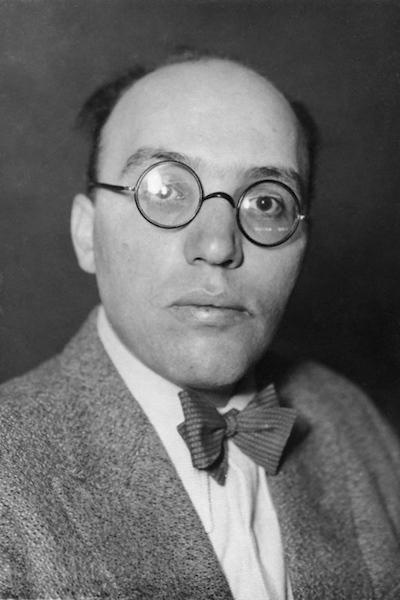
Although Kurt Weill’s *The Seven Deadly Sins* is based on the deadly sins as recognised by the Catholic Church, Weill – together with Bertolt Brecht – gave these sins a new interpretation.
This powerful play
Weill – *The Seven Deadly Sins*
Sloth, Pride, Wrath, Gluttony, Lust, Greed and Envy – here they represent the stages of life and suffering of the young Anna, who sacrifices herself for her family, a family already broken by the pressures of their inhuman environment – and who experiences a schizophrenic split, perceiving herself as Anna 1 and Anna 2. Kurt Weill also envisaged a role for a ballerina in this work, who dances the part of Anna. Yet this is usually omitted. The split in her personality is clear enough even without it. Anna is nonetheless driven across America by a family that wishes to lead a comfortable life at her expense, that readily accuses her of laziness, and that is sung by a quartet of men.
‘The Seven Deadly Sins’ was composed in Paris in 1933, where Kurt Weill had fled to escape the Nazis. Originally, he wanted to engage the writer Jean Cocteau as the lyricist, but Cocteau was too busy. So Weill once again turned to Bert Brecht, with whom he had already worked in Berlin. ‘The Seven Deadly Sins’ became their final joint project. This biting satire did not enjoy great success, perhaps partly because its harsh critique of capitalism was not easy for contemporaries to grasp. (Press release)
In collaboration with the Volksoper Wien
https://www.volksoper.at/produktion/die-sieben-todsunden-gianni-schicchi-2027.1019238725.de.html