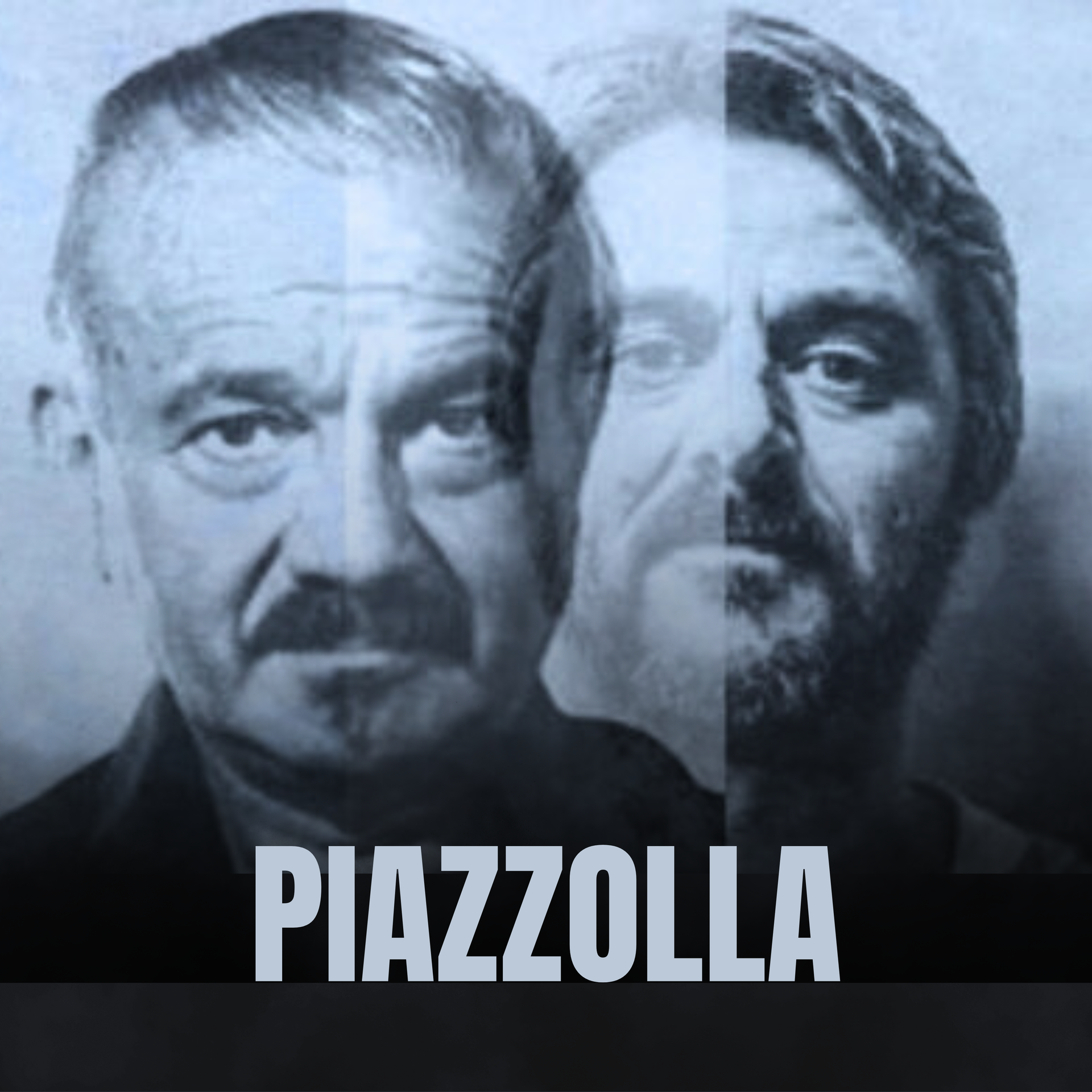
Daniel 'Pipi' Piazzolla & Escalandrum 'Piazzolla plays Piazzolla' (ARG)
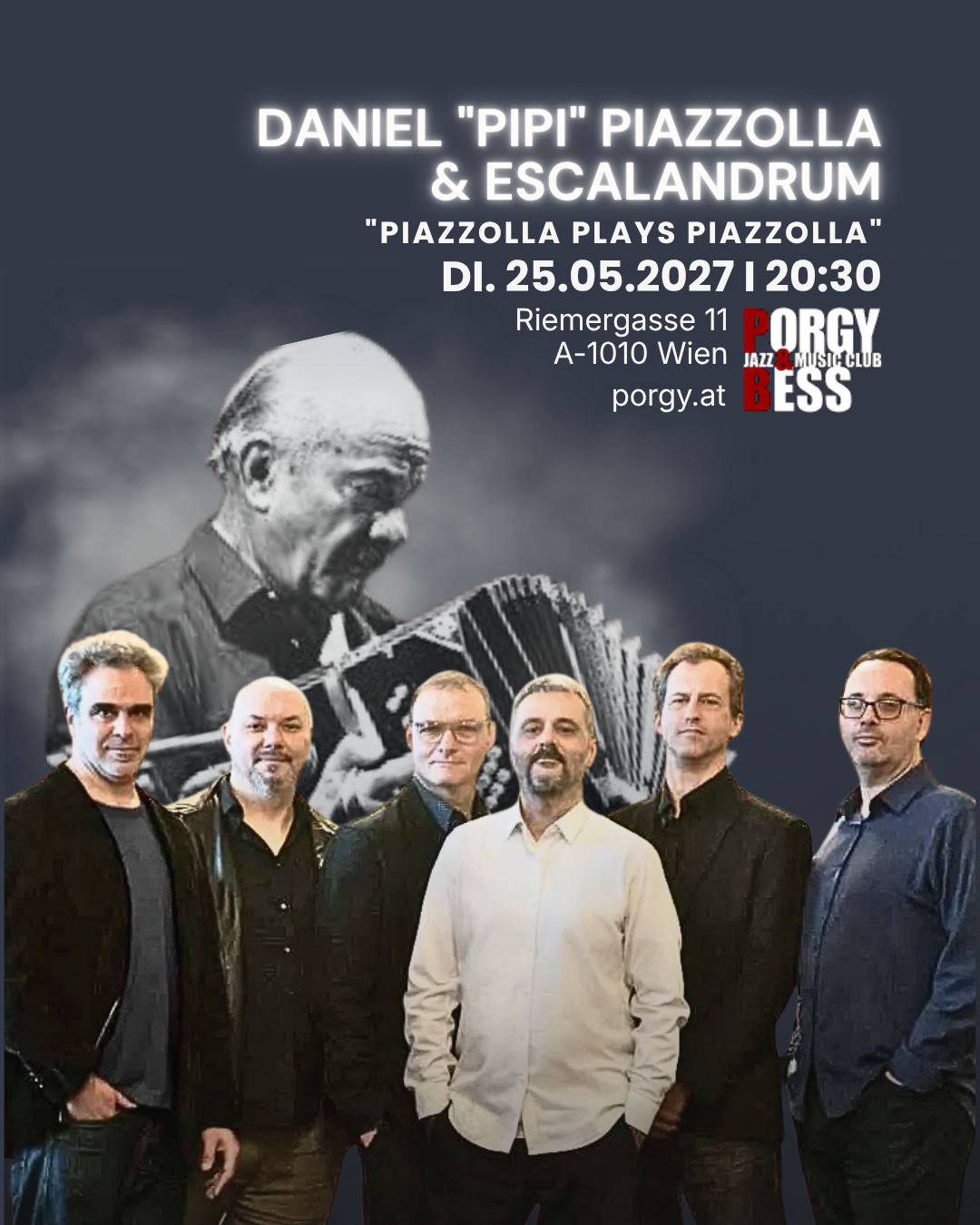
Martín Pantyrer: clarinet
Damián Fogiel: tenor saxophone
Gustavo Musso: alto, soprano saxophone
Nicolás Guerschberg: piano, arrangements
Mariano Sívori: bass
Daniel 'Pipi' Piazzolla: drums
We start the live stream approx. 1/2 hour before the concert begins (real time, no longer available after the end of the concert). By clicking on "Go to livestream" a window will open where you can watch the concert free of charge and without any registration. However, we kindly ask you to support this project via "Pay as you wish". Thank you & welcome to the real & virtual club!
Daniel “Pipi” Piazzolla’s sextet. 16 albums, concerts in more than 40 countries, and a unique musical fusion of tango and jazz.
Tango and Jazz—A Shared Voice
Daniel “Pipi” Piazzolla, grandson of the legendary bandoneonist and composer Astor Piazzolla, founded the ensemble Escalandrum in 1999.
During its first 20 years, the group released eleven albums of original compositions and thrilled audiences at concerts in more than 40 countries worldwide. With the extraordinary album “Piazzolla Plays Piazzolla,” Escalandrum created a striking tribute to the great Astor Piazzolla. The work blends tango and jazz in a unique, fluid way, allowing the Argentine master’s music to shine in a new sonic landscape. The official album launch took place in Buenos Aires, featuring the internationally acclaimed musician Paquito D’Rivera as a special guest.
Escalandrum „Piazzolla Plays Piazzolla“
Astor Piazzolla’s music, reinterpreted by his grandson Daniel “Pipi” Piazzolla and one of Argentina’s most renowned jazz sextets.
“Piazzolla Plays Piazzolla” is a fascinating musical synthesis and reinterpretation of Astor Piazzolla’s work, presented by Escalandrum, the internationally renowned jazz sextet led by his grandson Daniel “Pipi” Piazzolla. With this project, Escalandrum approaches Astor Piazzolla’s musical legacy with extraordinary artistic determination and at the highest musical level.
This time, the focus is on Astor Piazzolla’s body of work—examined and reimagined from an unmistakably jazz-oriented perspective, without losing sight of the deep roots of tango. The soundscape evokes Piazzolla’s legendary recordings with baritone saxophonist Gerry Mulligan as well as his musical collaboration with Gary Burton. Particularly impressive are the carefully crafted sound textures of the horn section. Melodies by Astor Piazzolla, which seemed to have already reached their highest expression, unfold a completely new musical dimension through previously unexplored counterpoints.
The ostinatos underscore the defining power of the rhythm. The groove remains ever-present and is inextricably linked to the musical identity of this ensemble. The rhythm section, in particular, navigates highly complex metrical structures with astonishing ease and naturalness. From the very first bars of “Libertango,” one can sense that unmistakable musical identity of Buenos Aires that Astor Piazzolla imbued into the tango. At the same time, the musicians give improvisation a prominent place—a musical practice that was long considered rather foreign to the tango, a genre traditionally heavily influenced by fixed arrangements.
These extraordinary musicians, tireless explorers of new soundscapes, invite us to, in a sense, multiply Piazzolla by himself, to delve deeper into the essence of tango, and to rediscover its hidden dimensions. Where musical boundaries blur, the unmistakable identity of Buenos Aires emerges with full expressive power. (Diego Poeta and MACHI Kultur)
An event presented by MACHI Kultur
https://machikultur.com/festival-argentina-austria